Saturday, October 02, 2010

TSTEC 2010 at New Milford High School


October 2, 2010 at New Milford High School, New Jersey

This is a delayed posting of my attendance at the first #TSTEC in New Milford, NJ.
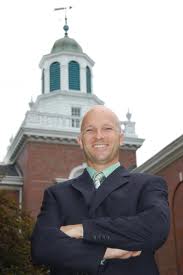

This was the first time I meet Eric Scheninger, Principal of New Milford High School. He had worked with Teq and Schoology to bring this conference to New Jersey as a venue for technology professional development for teachers. Included were presenters Adam Bellow, Tom Whitby, Samatha Morra,  and many teachers in the tr-state area that were doing great things in the classrooms by integrating technology within their lessons.

This conference was fantastic and introduced me to how to implement social networking, online learning, using cell phones, etc. in the classroom. The presentations were all available online and using cell phones and twitter the audience had the opportunity to participate. I do plan to post pictures and some of my notes that I have on the different workshops I attended.

Lisa Neilsen's presentation regarding her blog (The Innovative Educator, http://innovativeeducator.blogspot.com/) and the use of social networking, cell phones, twitter, facebook, etc. within the classroom.

Lisa Nielsen : presentation thinking outside of the ban. The presentation can be found on http://tinyurl.com/thinkoutsidetheban. There is a principal in ridgefield, nj that was interviewed about blocking social networking and parents should say no to students that do social networking. In teaching as a Submersive Activity by Neil Postman in 1971 spoke about schools being the way they are due to how we as educators create the environment in the schools. She assist principals, teachers and students how to create blogs. She created the Innovative Educator blog and then was banned from having the blog from her employer and many comments regarding not having a blog. She wrote in Technology and Learning about the risking of blogging. She wrote on using cell phone in the classroom how to harness the use of cellphones for homework. http://tinyurl.com/cellphones. 2,500 students receive cell phone articles in NYC why not use this for education purposes? Texting messaging 5 ways to be used in schools.

I also attended George Engel, Pre-Calculus teacher from Clarkson Central Schools and how he used cellphones in his class to get instant feedback from students and what was presented in a lesson. For the firts time I was introduced to BackChanneling, Wiffiti and how they could be used in classroom instruction.

One of the scheduled presentations was done by Tom Whitby from St. Joseph's College. His presentation inroduced me to many of the Web 2.0 Tools that could be used in the classroom by teachers that would be at no cost to the school district. During his presentation there was a discussion on what is blocked or not blocked in a district and how could a teacher convince the administration and IT staff the need for these tools to better prepare students for the 21st century. The need for teacher to be student-centered rather teacher focused was also discussed and how teachers can progress to this model of teaching and learning.

I left this conference totally convinced that for my district to move forward there would be a need to adopt mobile technology with the use of cell phone in the classrooms. But this would require to get buy-in from all district stakeholders and the beginning process would be to change the present technology policy to include personal mobile devices. Due to financial limitations it would be ncessary for the district to allow students to bring in their own devices in the classroom so that they could be used for instructional purposes.

Sunday, January 04, 2009

Ed Tech Overview in 2008

Ed Tech Overview 2008

David Warlick at NJElite

Will Richardson at Kean University (PLP pilot)
It has been sometime since I have added to this blog but I thought it was important to add at this present time because I have attended quite a few conferences and training in New Jersey. There is so many changes in Ed Tech that it seems as if time just disappears before you have an opportunity to comment on these changes.
The following three conferences and training was done since January 2008 - NJ Elite 2008 in Wildwood, NJ, PLP pilot program at Kean University, NJ and the Career Academies training done by the Department of Education in Atlantic City, NJ.
Linda Carmona-Bell at NJAET

David Pogue at NJElite
Even though these conferences and training maybe be different, the underlining theme is that the technical tools that can be used in the learning process of students keep expanding but somehow the "educational institution" does not seem to want to change. As one superintendent mentioned in one of these conferences, "....we to move forward even if it means we are taking them kicking and screaming into the 21st century". The issue is not the student of today but trying to change on institution that has not changed since 1950 does pose as a massive task. But can we wait any longer or can we give up? I must say that after attending these training and conferences it has renewed my belief that we can make a change and that we can prepare our students in a more effective manner for college or for the work place. Thanks to all that renewed my belief in our school systems!!!!
CIE at Kean University

Thursday, August 28, 2008


Professional Learning Practice Leaders Meeting at Kean University

The leaders meeting of this pilot was absolutely awesome and I believe will be a great success for all those involved. The main goal of the group is to change the mode of instruction and learning to be dynamic and student-focused by using technology. The main outcomes are connections, sustainability, capacity. knowledge, pedagogy. Even though technology will be used in this pilot, it is not the main focus. The concept of changing the instructional process is not going to be an easy situation but it has become a necessity unless all our students "are left behind" in the coming economy and globalization of our world. Instruction has not changed much from the 1950s and this does not only affect teachers in a K-12 environment but it also affects the post-secondary institutions. The participants for this project includes NJ Dept of Ed, Kean University, NJASA, NJPSA, and different school districts in the state covering K thru 12th grade.


Learning through emersion.

The craft of education community.

Implement change and be involved in our student’s lives.

It's becoming self-directed and no longer linear.

Emergent design models.

Members of the community owns the community.

Leaders become members of the community.

Needs to evolve over time.

Co-created and building champions.

PLP objectives:
1. understanding of the shifts that occur
2. provide fundamental and practical understanding of how online networks are challenging traditional notions
3. teach participants how to use many of these tools
4. oppotunities for classroom teachers, administrators and other personnel to learn
5. facilitate meaningful collaboration among individual school teams
6. build capacity for individual to grow their own personal learning networks
7. foster an understanding of the shifting pedagogies required to teach Read/Write tools and the literacies that go along with it.


In the afternoon Will and Sheryl presented and demonstrated the online tools that would be used for communication and collaboration during the project including Elluminate, Blogging, creating Ning environments, Delicious bookmarks, Twitter, etc.. At the end of the meeting new connections were formed and the excitment of this project could be felt in the air. The possibilities are endless and will affect the students of New Jersey directly.
NJ Elite 2008, Wildwood, New Jersey.


For the first time I was actually training administrators on how to use Google tools for administrative purposes. On Wednesday 07/16/08, I attended lunch and hear a presentation by David Pogue - Five Technologies for the Next Five Years.

It was great to share the experience with one of my colleagues from my school district and also have a personal conversation with administrators and presenters at my table including David Warlick and Kevin Jarrett.


Kevin had created a Ning online community for conversations to continue during and after the conference. Pogue discussed several tools that at present I have used myself and found to be very useful. The Google 411 is absolutely great! The new T-Mobile phone system is now being adverstised on television and has me considering whether I should change services. The presentation was funny and to the point on what technologies will be introduced in the coming years. Kevin Jarrett did recorded some of the presentation at http://www.ustream.tv/channel/njelite-pogue-keynote.


The strands that were offered to the attendees of the conference were:


1. Administrative Productivity with Technology (where I taught about using Google Tools and 2 other workshops on using Microsoft Excel and using Microsoft PowerPoint)


2. The Future of Technology and Learning (co-presented by David Warlick and Kevin Jarrett)


3. Superintendents/Principal Forum


The main speaker at the end of the conference was David Warlick. Overall the conference was great! The exchange of ideas and practices at other school districts does inspire me to try new and innovative ways of incorporating technology in my school district.


Some pictures by David Walick on the NJ Elite Conference.


Thursday, July 19, 2007

Presentation by David Warlick: Video Games as Learning Engines


NJ Elite 07/19/07 Video Games as Learning Engines - Presenter David Warlick
We continued this morning in attending a second workshop. David Warlick presented on how video games can be used in education. He mentioned several people that discuss or write about the cutting edge of technology using the idea of gaming. He began with the definition of what is a game? He referred to Glenn Wiebe of ESSDACK definition as


NJ Elite 07/19/07


Workshop on Podcasting for Teaching and Learning - Presenter: David Marra of Apple, Inc.

This morning we attended a workshop on using podcasting in the classroom. Podcasting is used for a combination of different media elements to create projects and for the publishing the product to the world via the web. The informaation is shared, collected and then created that can be used on an Apple or PC fomat. Podcasting has become a cultural phenomena. It is a combination of an Ipod and traditional radio broadcasting. Not only can a lesson be recorded via audio and video but handouts are also avaliable using iTunes as the gathering software. On iTunes there are 90,000 podcasts available at no cost. The website for finding educational podcasts is www.apple.com/education/podcasting. Podcasting began in 2004 and has bloomed into a major cultural icon. Companies have used podcasting as an internal training for their employees. They are also used in higher education as an extension of the classroom presentation. One university using podcasting is Standford University. The website is http://itunes.standford.edu. There are several tools can be used for creating podcasts iMovie, iWeb, iDVD, iPhoto and GarageBand. Audacity software can be used for creating podcasts in PC devices but it is audio only. Even though the podcast is created on a Mac, it can be played back on any device. David presented that an iPod could be connected directly to a projection device using an iPod AV cable. The iPod also has a universal docking device that connects the iPod to a remote control to control the iPod. David also demonstarted how GarageBand 3.0 functions and some of the added features that can be used. The presentation was done well even though there was issues on using the Internet.

Wednesday, July 18, 2007

NJELITE 2007 Conference: Summer of Learning


NJPSA/FEA/NJASCD One-Day Summer Convention Wildwood, NJ 07/17/07

Summer of Learning 2007

At the convention there was 4 main workshops. They included School Law, Teacher Leadership, Blueprints for Student Success and Differentiated Instruction. I attended the workshop of Differentiated Instruction. Willa Spicer, Jennifer Hunsinger and Tina Gordon presented on technology in differentiated instruction and how it could be incorporated within the classroom. The definition of differentiated instruction by Tomlinson is "Differentiating instruction is not an instructional strategy or a teaching model. It’s a way of thinking about teaching and learning that advocates beginning where individuals are rather than with a prescribed plan of action, which ignores student readiness, interest, and learning profile". The main focus is teaching all children to understand and finding evidence of learning. Students need to be information managers. Jennifer Hunsinger presented a powerpoint presentation with hyperlinks related to the concepts of differentiated instruction. Then Tina Gordon and the Math supervisor of Wall Township School District, Erin Embon showed a video on how differentiated instruction is implemented in Wall Township. Different teachers at different grade levels demonstrated how differentiated instruction was adapted in different subject areas by ability grouping. At the end of each teaching strategy, teachers were interviewed on what they thought about differentiated instruction and the changes they would make for the next implementation, the time and planning necessary to have a success lesson.

There was an exclusive keynote luncheon with Pedro Noguera, Ph. D. in the afternoon. He presented on "What Do Educators Need to Know to Reduce the Achivement Gap". He showed a powerpoint presentation that discussed the achievement gap and how this can be achieved. He discussed about confronting the achievement gap and the normalization of failure that is accepted in the school culture. The conditions needed to raise student achievement included shared leadership, collaboration, on-site ongoing professional development, etc. Placing the best teachers in the classroom with the lowest performance students is not the usual practice of most schools. Normally the best teachers are teaching the AP courses and teaching the high scoring students. Effective teaching strategies mentioned included simulations, Socratic seminars, project-based learning, constructivist methodology, etc.. The presentation was well received by everyone.